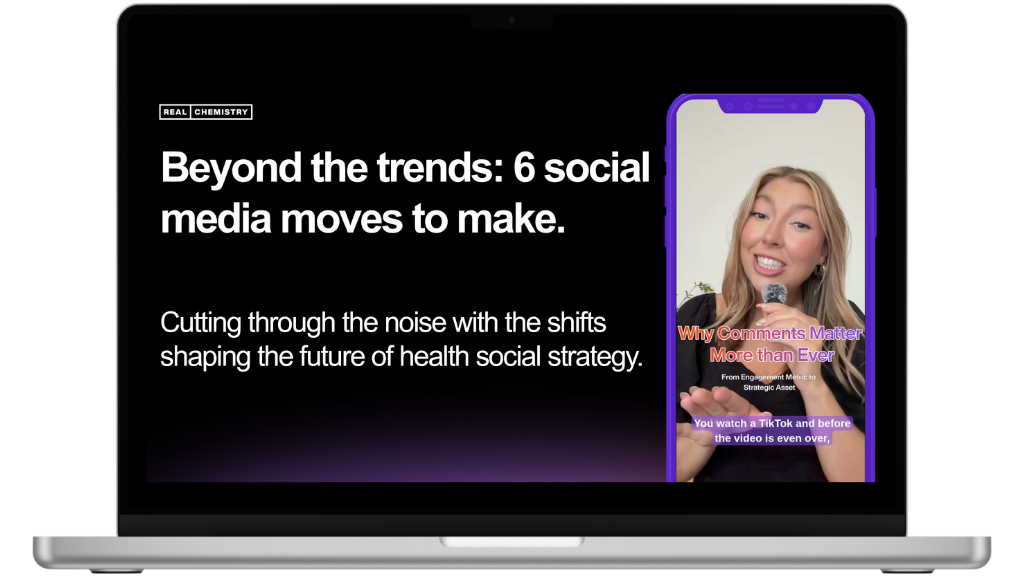
[Report] Beyond the Trends – 6 Social Media Moves to Make: Cutting Through the Noise With the Shifts Shaping the Future of Health Social Strategy


Our new social media report cuts through the usual “what’s trending” noise with six practical moves healthcare and medicine companies can make right now: build campaigns for social from the start, protect trust in an AI-saturated feed, create content that gets cited in AI discovery, make creator-led content work harder in paid, use influencers to drive global disease education, and treat comments as a strategic source of content.
At its core, this is a report about the next era of social planning: less repurposing, more intentionality. Social is no longer just the place content goes after the campaign is built. It is where audiences discover, question, validate, engage, and increasingly shape what brands, companies and leaders should say next. Across the six moves, the common thread is clear: the brands that will break through are the ones designing for how people actually behave in feeds, comments, creator ecosystems, and AI-powered discovery environments.
Read on for six key takeaways from the report, then explore the full report for additional insights and videos from six experts across Real Chemistry’s U.S. and global social and influencer team.
1. Social-first planning production starts long before the shoot | Mirelle Paris
“Social-first” is not just vertical video or grabbing a few extra cutdowns on set. It means bringing social strategy into the brief, the concept, the shot list, and the production plan from day one, so one shoot can fuel a full ecosystem of platform-native content across paid, organic, BTS, short-form edits, stories, and thought leadership.
2. Be safe, be real, or be questioned | David Barton
Brand safety and responsible AI use should be framed as reputation strategy, not a checkbox. As AI-generated content becomes more common, audiences and platforms are putting more value on authenticity, transparency, content controls, and IRL content attribution like behind-the-scenes footage, credited partners, and visible human craft.
3. The Future of Reputation is Being Cited, Not Just Seen | Eileen O’Brien
AI is changing discoverability and reputation: audiences increasingly ask machines first, and the brands that win are not simply louder, they are more cited, credible, and easy to trust. LLMs prioritize what people say and share, which makes executive thought leadership, creator partnerships, earned media, and social content more important to reputation than ever.
4. The Best Paid Social Ads Don’t Feel Like Ads | Shaun Campos
The next evolution of influencer partnerships: moving beyond “creator posts, brand amplifies” and treating creator-led UGC as a strategic paid social asset. The opportunity is to build UGC deliverables and paid usage rights into briefs and contracts, then use that creator content across boosted and dark social placements to diversify creative and make paid media feel more native to the feed.
5. Global Disease Education is Only Half the Story | Masha Snitkovsky and Valeria Shvack
Disease state education is especially important in Europe and the UK, where patient-facing content often needs to stay unbranded. The key pivot is that patient awareness alone is not enough: if patients are learning about symptoms, diagnosis, and unmet needs through influencers, HCPs also need to be informed and ready for the conversations that may follow.
6. The Comment Section is the Most Overlooked Asset | Isabel Trombly
Comments are more than an organic engagement metric. The comment section is a live source of audience insight, community building, content ideas, unanswered questions, misconceptions, and language brands can use to create more relevant education and stronger relationships with their patient and HCP communities.
View the Report: What Healthcare Companies and Brands Need to Know About the Future of Social
Featuring insights from Real Chemistry experts across social strategy, AI, influencers, reputation, and global engagement, this report highlights the shifts shaping what’s next and the actions companies and brands can take now.