
Investor Relations in the Age of GEO – A Primer Heading into JPM and for 2026 Strategic Planning


By Zack Kubow, Luke Heagle, and Maxine Eichen
Artificial intelligence powered by large language models (LLMs, also referred to as “generative AI”) has quickly become ubiquitous online, leading to a new focus on generative engine optimization, or GEO. Similar to search engine optimization before it, GEO aims to optimize the results of AI searches. Consider the following stats:
- 58% of traditional searches are zero-click
- 84% of AI users turn to AI several times per week
- 94% of AI users expect to increase usage next year
AI-based tools and search results have great influence over the information provided to users across a range of use-cases, from managing health to conducting deep research.
Applying an Investor Relations Lens to GEO (with Real Chemistry Analytics, of Course)
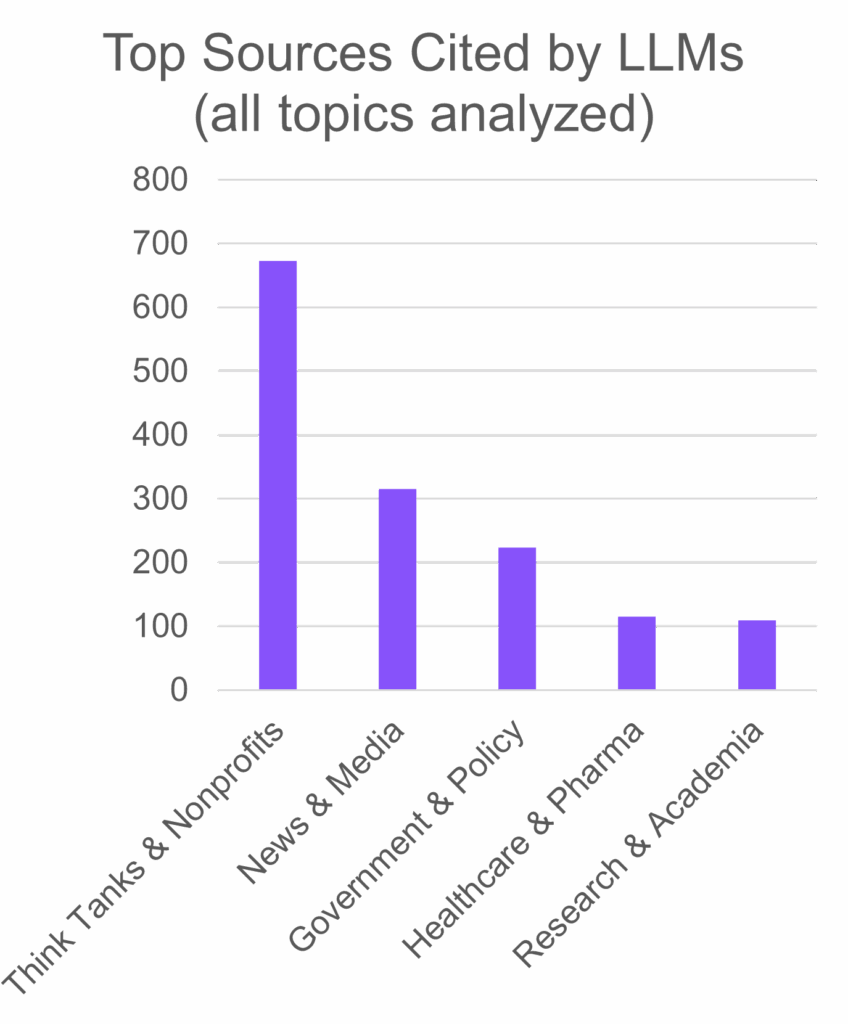
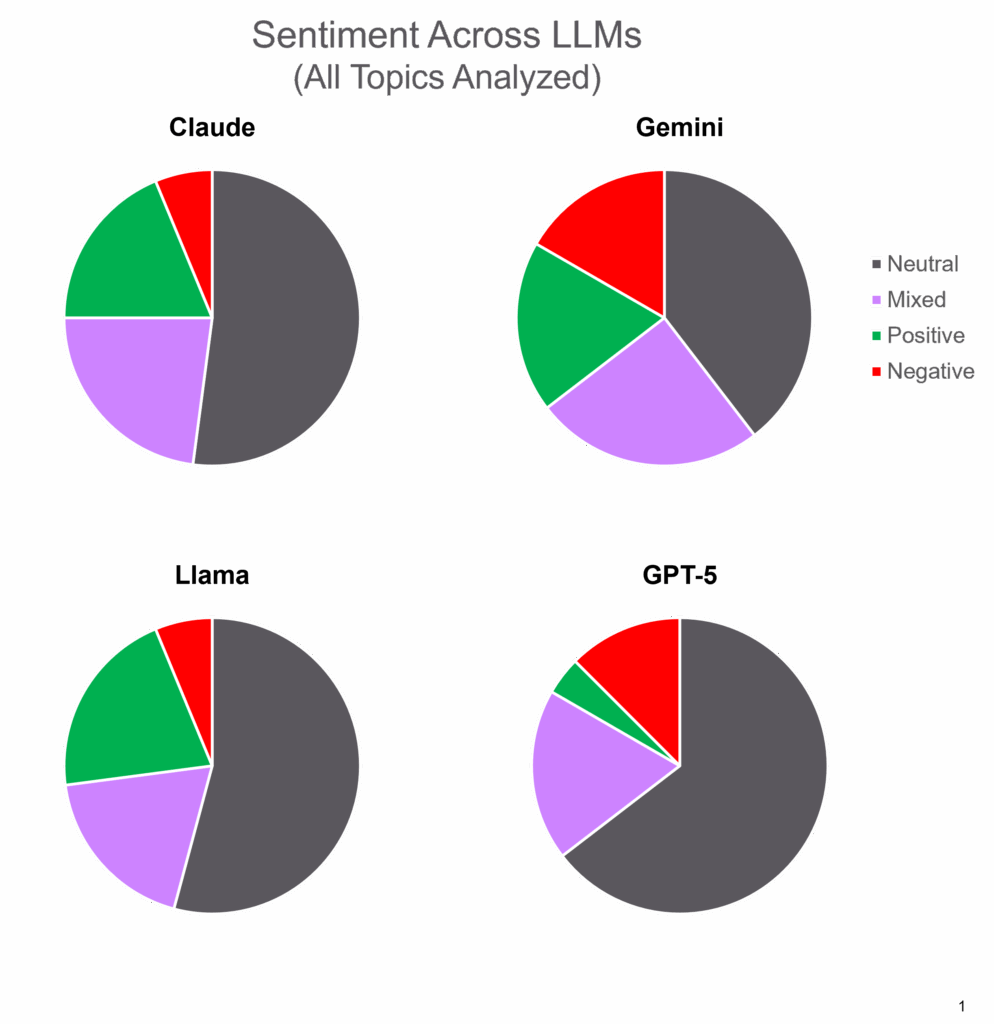
The Real Chemistry Investor Relations and Analytics teams are partnering to explore the intersection of GEO and healthcare industry trends, specifically leveraging our HealthGEO product offering and social listening analytics to analyze topics that we know are top of mind for biopharma investors. We’ll share which websites influence LLMs (spoiler – it may not be what you expect), the tone of answers across LLMs, and some broader takeaways to optimize the impact of important updates given at meetings such as JPM.
The results demonstrate new considerations for Investor Relations teams, as they track the sources of information that may influence the investment community. They also highlight why it’s more important than ever to leverage an integrated communications strategy that is positioned to optimize company- and industry-related content being accessed via AI-tools.
Our Approach
In order to conduct this analysis, we needed to confirm two things: 1) what are the top macro healthcare topics of interest to the biopharma investment community; and 2) what questions are they asking about these topics? With this in hand, we could leverage Real Chemistry’s HealthGEO product to analyze the results that AI-based tools and search yield on these questions, and more importantly determine the sources behind these results.
Top Macro Healthcare Topics
Each quarter, the Real Chemistry Investor Relations team tracks the top healthcare policy related topics discussed by a group of biopharma companies in their quarterly earnings conference calls, both proactively and in Q&A. This provides a view into the key topics from a professional investor perspective. Then, partnering with the Real Chemistry Analytics team, we leveraged our social media listening tools to analyze the discussions on healthcare policy that individuals are having across a variety of platforms.
Combining these two efforts, this gave us a list of four key policy areas and a series of specific questions related to them. The policy areas are not surprising and reflect the ongoing dynamic environment being driven by the current administration in the U.S.
- Most Favored Nation (MFN) Drug Pricing & “TrumpRx”
- U.S. Tariffs and Domestic Manufacturing
- Direct-to-Patient (DTP) Pharmaceutical Programs
- Vaccine Sentiment and Policy Impacts
The investor questions we surfaced related to each topic focused on understanding and gauging the impact these macro trends are having on the healthcare industry and how biopharma companies are adapting to the evolving environment. They also aimed to gain more clarity on key policy changes, given the current uncertainty and evolving nature of the changes.
Health GEO Analysis
HealthGEO is Real Chemistry’s proprietary product that unlocks the black box of AI-based search. It uses a multi-model approach across leading LLMs and GenAI search tools, and compares outputs side-by-side to spot variation and bias. It is designed to mirror authentic stakeholder voices across patients, healthcare providers, policymakers, and investors. It provides the ability to trace underlying sources, surfacing misinformation risks, competitor skew, and white space.
Applying HealthGEO to analyze the questions for each key policy area, we are able to view and analyze the answers our investor audience would receive across our question set and various LLMs. This yielded 100s of results from four top LLMs (Claude, Gemini, Llama, and GPT-5) that we then processed through our analytics tools to summarize and identify useful trends.
The Results
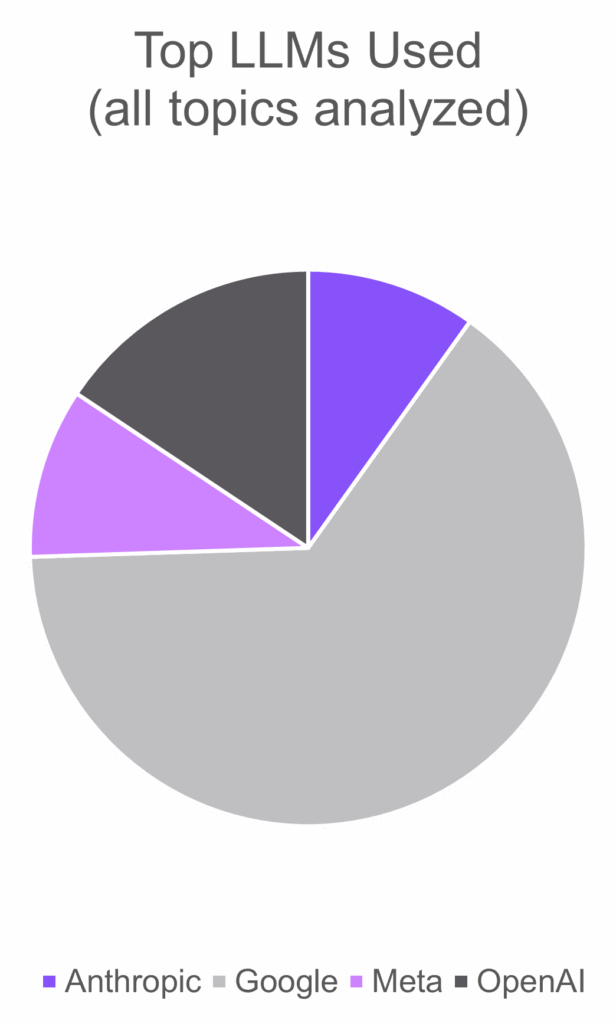
Below, we have summarized the results for the key policy areas, showing the main sources driving the AI-search results and the sentiment around each.
The Takeaways
The most interesting considerations for Investor Relations teams include:
- Many of the top sources cited by LLMs aren’t traditional news sites that you might expect, they’re Think Tanks and Non-Profits, along with .gov or NGO websites (CDC, HHS, WHO). Working with and messaging through traditional channels might not be enough anymore, and messaging should be pushed out across a wider variety of channels and partners. LLMs often treat news coverage as secondary or supplemental. Influence increasingly depends on high-credibility evergreen sources, not short-cycle news spikes. IR teams should work to optimize owned content and strategically influence policy-adjacent sources.
- The LLMs are largely neutral in their responses, but Google Gemini is both the most used LLM and the LLM providing the most responses with positive or negative tones. You’ll want to pay special attention to where Gemini is pulling their information from and incorporate it into your media strategy and SEO/GEO website optimizations. Because Gemini heavily rewards structured pages, internal linking, and source citations, optimizations here can disproportionately shift how your company shows up in AI-search.
More broadly, while the core investor audience will always be heavily vested in direct research and engagement on a company, they may at times look to an LLM for both company specific and macro industry trend research. Consider these additional takeaways:
- IR and corporate communications strategies should factor in the LLM ecosystem, and identify key opportunities to exert influence that provides accurate and favorable content for applicable AI-search topics. This includes prioritizing text formats that LLMs ingest and refreshing content more regularly (i.e. quarterly).
- Optimizing owned channels and ensuring Investor Relations messaging is consistent and leveraged in all external communications is likely an important baseline step.
- More specifically, consider building LLM-friendly policy explainers and align messaging with think tanks, NGOs and trade groups.
- Given GEO has implications beyond IR, an integrated approach with consistent narrative reinforcement should create the broadest impact for your company.
With HealthGEO, we can go even deeper – digging into the positioning, narratives, and most mentioned companies showing up in top investor questions.
Interested in learning more about HealthGEO?
Tell us what you'd like to know about HealthGEO. Our team will be in touch to answer your questions or schedule a demo.