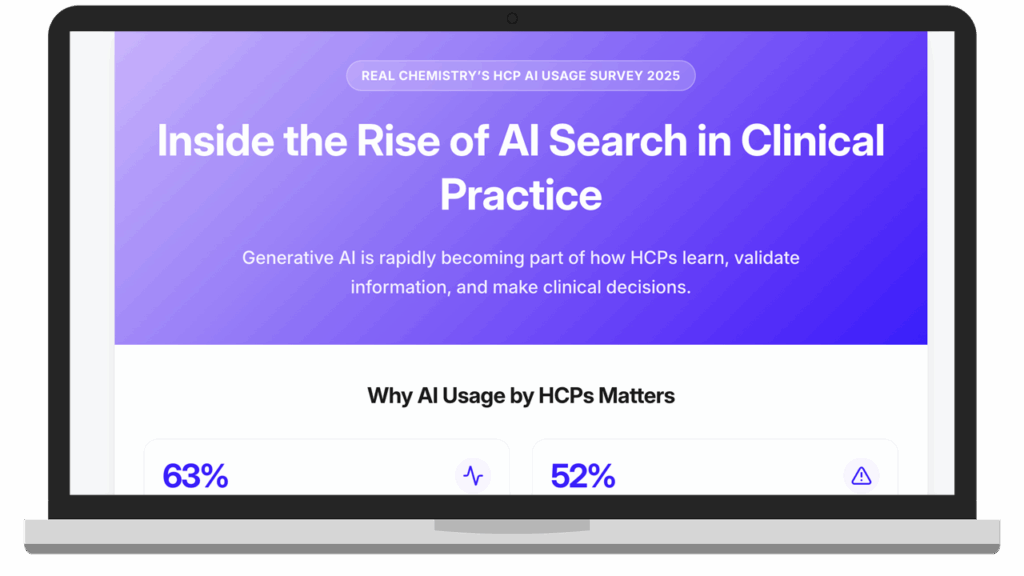
Welcome to the Deep Dive. We’re your AI podcast hosts from Real Chemistry. Today we’re getting into something that really is a massive strategic challenge for anyone in medical communications. Yeah. It’s this complete overhaul of how health professionals and even patients are finding medical information. And our source for this is the new healthcare professionals AI survey which our own Real Chemistry Integrated Intelligence team just put together. We’re talking about a really profound and, immediate shift in behavior. And we should be very clear right up front. The data we’re about to discuss, it focuses specifically on the group that’s really setting the pace here. Right. This isn’t all physicians. It’s the sixty three percent who told us they’ve actively used an AI search tool for their job in the last six months. For that group, this isn’t some experiment. AI is, you know, it’s already a core utility. And when we say utility, the first thing that just jumps out is the pace. Yeah. The sheer pace of adoption. This is not a slow burn. No. It’s workflow saturation. Yep. So let’s unpack that. Among this group, the AI users, it’s intense. We’re talking eighty four percent, almost all of them, are using it several times a week. Several times a week. And get this, ninety four percent expect that usage to climb even higher over the next year. Which just tells you the time savings are real and probably a little addictive. Oh absolutely. The main driver, the reason they’re turning to tools like Chad GPT or Claude is speed. Seventy nine percent told us they use it when they just need a fast answer. And it makes them feel efficient, I think was the top word. Efficient at sixty six percent and helpful at fifty percent. I mean time is the one thing they don’t have and AI is seen as the shortcut to getting it back. Okay but this is where it gets, a little concerning especially for medical affairs. Let’s talk about the verification gap. This is the big one. Despite using it for high stakes clinical work, fifty two percent so, more than half of these physicians told us they don’t usually verify what the AI tells them. They just take the answer and run with it. Pretty much. We asked why and the top reasons were that the output, you know, aligned with what they already knew. A bit of confirmation bias there. Right. And the other big reason was just limited time. So that initial AI summary for half the audience becomes the final piece of research. And we should really stress this isn’t just for you know scheduling or something. The top use cases are heavy. Seventy percent are using it to research medical conditions or treatments. And sixty two percent are using it for clinical decision support. So your organization’s story, your data, it’s either being found correctly and used immediately or it’s just being missed entirely. Which leads right into this idea of AI’s sort of sudden competitive advantage over the traditional sources of information. This is the part of the survey that should really redefine how commercial and medical teams think about getting their information out there. The disruption to the sales channel is, well, it’s staggering. When physicians compare AI search to a pharma sales rep, eighty seven percent find the AI to be equally or more reliable. More reliable? And then there’s convenience. Right. A massive ninety one percent find AI search tools equally or more convenient than a sales rep. That traditional value prop of the quick drop in with information, it’s being completely eroded. And it’s not just the sales channel, is it? It’s actually extending into their own professional networks. Yeah, that was a real surprise. We found that sixty one percent of physicians find AI search to be equally or more reliable than their own colleagues and peer networks. Think about that for a second. For a quick on demand answer, a doctor is now just as likely or more likely to trust an AI than to, you know, text a colleague they trust. It just fundamentally changes things. So it begs the question, which tools are they trusting with all this? And it looks like there’s kind of a split, right? The general purpose tools, your chat GPTs, they’re still the most used at eighty five percent. They are, but you can see physicians are also looking for something more specialized, more compliant. Exactly. That need for vetted information is driving adoption of medical specific AI tools. We saw that sixty two percent of these physicians have used a tool like Open Evidence in the past six months. And that makes sense because while they want speed, they’re also aware of the issues. They have concerns about things like data privacy at seventy two percent. And potential biases in the model that’s at seventy six percent. Right and all of this is happening in a bit of a policy vacuum. The survey showed sixty three percent of these doctors don’t have any solid rules or guidelines from their institutions on how to use AI. Which puts even more pressure on pharma companies to create content that’s just inherently trustworthy and easy for these tools to find and index correctly. Yeah, absolutely. So, okay, let’s shift to the final piece of the puzzle because this isn’t just happening in the doctor’s office, it’s happening in the exam room. It really is. We’re talking about patient AI use. This is reshaping the whole dynamic of a consultation. The new normal it seems. Three quarters, seventy four percent of HCPs told us they’ve noticed their patients using AI to, you know, supplement their visits. So patients are coming in armed with their own AI driven research. Exactly. With printouts or with very specific questions they got from an AI and it changes the whole conversation. But interestingly, the doctors aren’t entirely negative about it. There’s some real optimism. Yeah. We found fifty nine percent believe that patient AI use can actually improve the interaction between them and their patients. And fifty eight percent even see the potential for it to improve patient outcomes. The thinking is, you know, if AI can boost patient literacy before they even walk in the door, that’s a win. Misinformation. A massive seventy eight percent of HCPs are concerned that patients are going to misunderstand the information that AI gives them. And that ties right into a concern about their own professional standing room. We saw fifty seven percent are worried that patients relying on AI might diminish the value of their own expertise. Right. They end up spending the first ten minutes of a fifteen minute appointment just correcting bad information instead of talking about treatment. And looking down the road, there’s even this concern about the structure of health care itself. Thirty percent of HCPs are worried that this could eventually lead to fewer in office visits. Which may be a long term risk. But the immediate takeaway for anyone in med affairs or comms is clear: you have to get ahead of this with high quality patient education. So let’s bring it all together. AI is actively influencing professional decisions, it’s shaping patient knowledge, and it is completely changing the game for information retrieval. The central finding for you, our listener, has to be this. AI isn’t just a search engine anymore, it is a primary knowledge filter. And that means it is absolutely critical that your accurate, evidence based content is what rises to the top of those search results. Because if it’s not, biased or just plain wrong information will fill that vacuum and that will directly influence both clinical and patient behavior. And this whole challenge, making sure your content is visible accurate in this new AI world, is exactly why we developed HealthGEO. HealthGEO is the first healthcare specific AI search analysis tool. It’s built from the ground up for what we call generative engine optimization. It’s a system built on insights from over ten thousand prompts, and it captures data through the lens of every key stakeholder, patients, HCPs, investors, journalists. And we aggregate the responses from all the major platforms, ChatGPT, Gemini, llama, claw to build strategies that, you know, increase your visibility, defend your reputation, and manage that misinformation we’ve been talking about. The bottom line is if you are still relying on old school SEO strategies in the age of generative AI, you’re already falling behind. That information vacuum gets filled instantly. We really encourage you to reach out to us at Real Chemistry. Let’s make sure that when someone asks a question, the AI tools find and share your organization’s version of the story first. The shift isn’t on the horizon, it’s here now, and your strategy needs to catch up.