A Quick Tour: Insights From inside the Cannes Pharma Jury


By Christopher Charles, Executive Creative Director, 21GRAMS, and 2026 Pharma Lions Juror
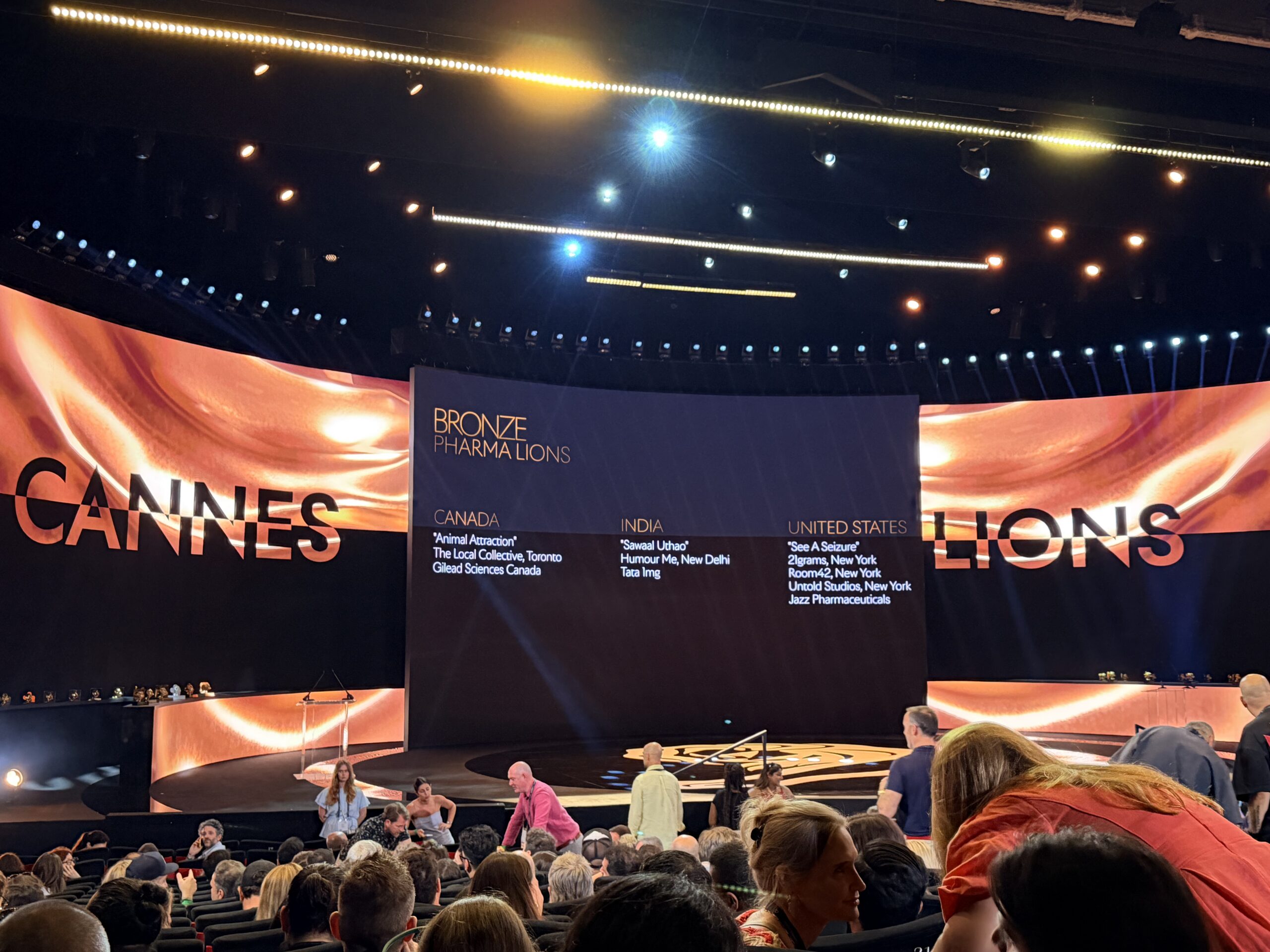
I just spent a week in a room most people never get to see. With a bunch of people I didn’t know. As a juror for the Pharma Lions at Cannes, my job was to sit with the 237 pieces of work and decide which ones were actually great — not great-for-pharma, just great. It’s a strange privilege, getting a front-row seat to the best the category has to offer all at once. So, I figured I’d pull back the curtain a little. Let me walk you through them—what they did, and why they worked.
We were a tough jury. And I’d argue we were tough for good reason.
When you represent pharma, you sign up for extra rigor. The work can’t just be good for the category. That’s the participation trophy nobody should want. It has to hold up against the best work in the world, full stop. Same bar as the beer ad. Same bar as the sneaker spot. No grading on a curve. Because believe it or not, pharma work has a higher calling: to cut through the regulatory, cut through the competition, and also earn the audience’s attention long enough to deliver important information that could save a life, help a loved one, or inform the naive. Seems a lot more interesting than selling a Snickers® bar now, doesn’t it? If we babied the category, then anyone could feel like they could do it.
Out of the 237 pieces, we shortlisted only 23. And when the dust settled, seven trophies went out the door. That’s it. The work had to earn its way through. It had to be interesting, it had to grab the audience’s attention in some real way, and it had to be good enough to inspire the next wave of ideas and actually push the category forward. And even though a decent amount of the work I would have picked didn’t make the cut, I think the breadth of work shown is a decent example of what good looks like.
*Caveat – Most of the work we saw was still very light on regulations, either skirting around it through a loophole, hacking the system, or hitting a gray area like public service announcements that do not need any kind of major statement or safety information. Which can be debated that it was taking the easy way out rather than fighting the good fight within the walls of a medical regulatory room.
I want to walk you through five of them. Not a ranking, exactly. Just five pieces that are all great in completely different ways that piqued my interest personally. I’ll start with a shortlist piece and move up from there.
1. NYEstalgia
Bill Nye the Science Guy is an icon. Global recognition, transcends generations, the whole thing. He also comes from a family that carries the ataxia gene, which made him the perfect face for a disease-awareness campaign about an ultra-rare form, Friedreich’s ataxia, built to get people diagnosed more often and a whole lot sooner.
Full disclosure: I’m part of the agency that did this work. And here’s what makes it great. Sure, it’s funny. Sure, it’s entertaining. But it brought back the ’90s in every way, shape and form. It tapped into a cultural phenomenon which acted as a lightning rod for attention. The team recreated his original TV show from scratch and built science vignettes that mimicked different ’90s craft formats, from illustration styles to Claymation® to puppets. The idea tapped into something way deeper than a celebrity cameo. It tapped into nostalgia. A deeply rooted feeling, stronger than joy or love. That’s a hook that stays with you. And it drove a 1,150% increase in genetic testing for Friedreich’s ataxia.
Wowza.
2. Animal Attraction
I personally loved this one because of how well it understood its audience.
Let’s be honest about HIV work across the industry. It isn’t that inspiring. Smiley people. Happy to be preventing HIV. This took it somewhere completely different by making the message specific to the gay community in such a creative way that it felt like a secret message built just for them. It used their vernacular, the way the community addresses each other: a bear, an otter, a pig, a wolf.
And it was smart on every axis. This campaign could live anywhere without triggering a conservative public uproar (god forbid you show two same gender-loving people kissing) and it dodged the usual regulatory claim concerns. Just the logo, the imagery, and the headline. That’s all it needed.
The only thing I wished they’d done was craft the art more by hand instead of leaning on full AI. A little more craft and it would’ve really stood out. But still, a lovely idea.
3. See A Seizure
This one is just really amazing, and it nails something I care about a lot: an idea that can drive direct, measurable impact on people’s lives.
When most people picture a seizure, they picture someone convulsing, locking up. But there are so many different types, and people with rare epilepsy can have over 100 seizures a day, with massive cognitive effects. The wild part? Even long-term care facility employees who care for some of these patients often can’t tell when a seizure is happening. If they could spot them, those patients could be diagnosed and get treatment.
These seizure types have been written about and described for years, but never actually visualized. The team used CGI to build a full visual library of what to look for across all the different types. And it works. In the first seven days of launch, one facility diagnosed six patients—in a category where it can take up to 15 years to finally get a diagnosis. Proud to say we’re responsible for this work at 21GRAMS, as well.
4. Viagra Blue Brands
Good ol’ Viagra. This one is about thinking creatively in the face of the impossible: finding the loopholes, the hacks, the ways to solve a problem sideways when the front door is locked.
The regulation they were up against: You can’t advertise direct-to-consumer in China. So, they trademarked the Viagra name as a CPG brand, then they physically made an entire set of products. And built an e-commerce storefront. Every single decision was made with intent, not at random, with each product relating back to Viagra in some way through innuendo. From a couple power-drilling a wall, jacking up a car or slowly extending a selfie stick. It’s a master class in creative problem-solving when the rules say no.
5. Relax Your Tight End
Last one, and it really resonated with me. This Super Bowl campaign took me straight back to watching ’90s Super Bowl ads on the couch with my father while laughing at the TV together. It was nice to see and felt special for a healthcare brand to embrace on the big stage.
It was genuinely funny. It was clear. And it spoke to its intended audience in exactly the right way. It tapped into a moment in time so perfectly, with an integrated platform at a very great scale. And that’s the reminder I want to leave on. Pharma ads should be operating on the same level as consumer advertising. Not a notch below. The same level. Because in our category, there’s much more at stake.
That’s the tour. Five pieces, five completely different ways to be great. But every one of them earned its attention, and every one of them gave the next wave of ideas something to chase.
P.S. One thing I will leave you with. Always strive to make great work in tandem with your clients and their regulatory teams. That’s where the real magic happens, and then you will start to achieve the impossible. Once you get in the groove of doing that, the awards will eventually come, but that is just the icing on the cake because you’ll already know you’re making great work for the people you need to communicate to. It will be hard, but it’s supposed to be hard. That’s what makes it great. The world doesn’t need another grandiose award-bait idea that claims it saved humanity tenfold and then disappears after it wins a Grand Prix. Hard pass.
P.P.S. I expect to see a lot more work in the women’s health space next year. This year was too low, and pretty disappointing. I know you’ve all got great ideas. Make ‘em.
See you on the Croisette,
Chris
More from Cannes
Explore more insights, perspectives, and standout moments from Cannes—and see how creativity is shaping what’s next in healthcare.