Beyond the Headlines: Telling Patient Stories


When I graduated from college and began my first job, I knew I was going to be working in public relations, but even with an offer letter in hand, I didn’t know exactly what that would entail.
I didn’t know that working at a communications agency would ultimately put me on a path that would allow me to help others, specifically patients. But before I get into that, let me back up and explain how I got here.
Right out of college, I started in an immersive program that allowed me to explore all facets of agency life, from brand marketing to copy writing to media relations. One of my rotations was on a health care media relations team, and I knew almost immediately that that was where I wanted to stay. As a media relations expert, my job is to partner with our clients, who include biopharmaceutical and medical device companies, hospitals and associations, to share important news, such as the publication of new clinical data or the launch of a new product or service. But one of the most rewarding aspects of what I do is tell patient stories.
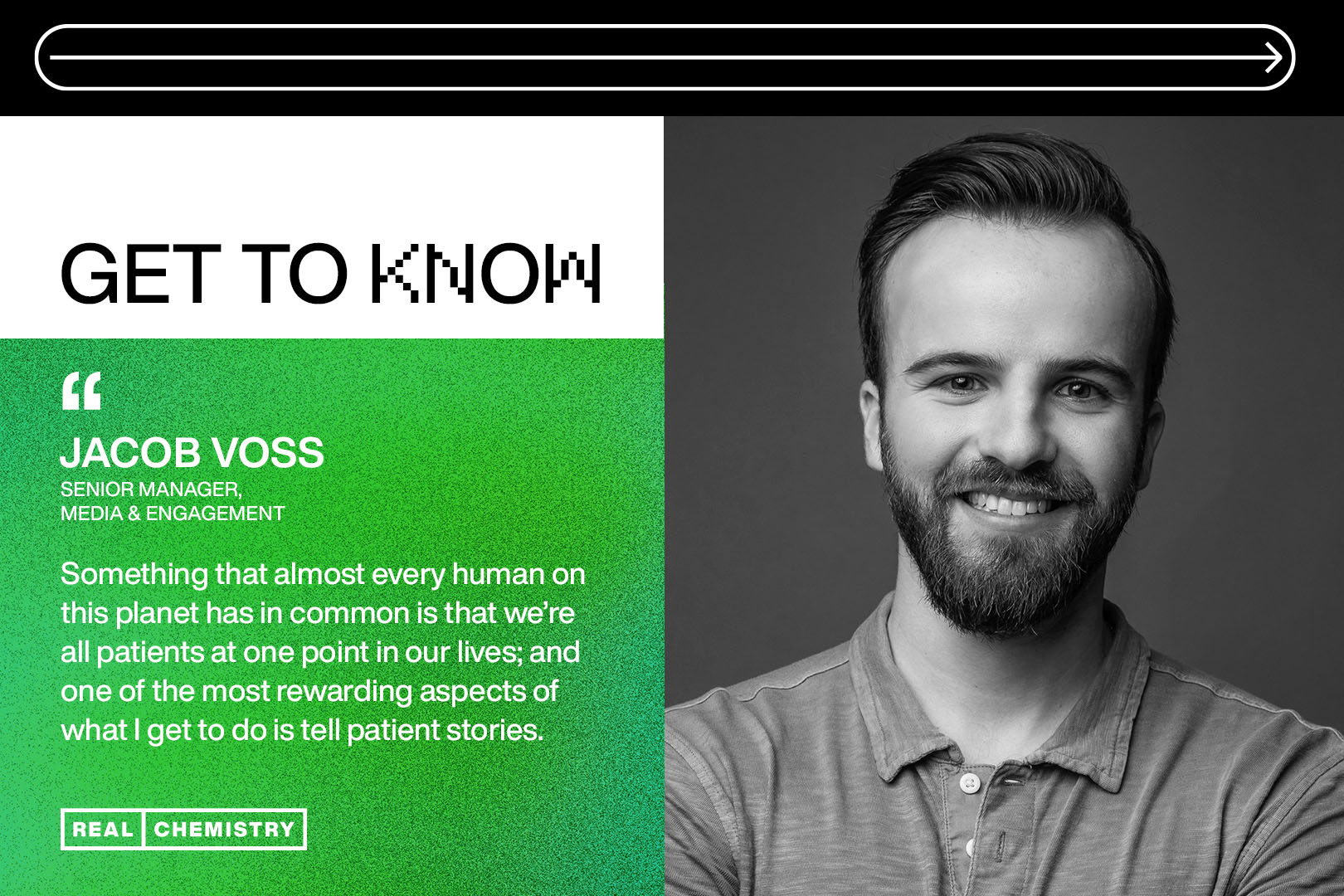
Something that almost every human on this planet has in common is that we are all patients at one point in our lives. The clients we work with at Real Chemistry impact the lives of millions of patients across the world every day, whether through the development of a new medicine that cures a historically uncurable disease, the creation of a life-altering medical device or the launch of a lifesaving disease state awareness campaign.
When searching for patient stories to share, we ask ourselves:
-
Is the story timely? Meaning, should people care now?
-
Will the story inspire others in some way, such as reminding others to keep up on their routine cancer screenings?
-
Will the story increase awareness of an important message, such as listening to your body’s warning signs when something feels off?
As an example of what I mean, I’d like to introduce you to a patient that our Earned Media Team worked with recently.
Julian was just 10 years old when he was diagnosed with leukemia. Treatment put him into remission, but his leukemia recurred when he was 16 and he needed a bone marrow transplant. According to Be The Match, the national bone marrow registry has about 22 million potential donors, but the odds of a Hispanic or Latino patient finding a match is 48% compared with 80% for a white patient. The odds are even less for Black or African American and Asian or Pacific Islander populations. Fortunately, Julian was able to find a donor and undergo the bone marrow transplant at City of Hope. His leukemia is now in remission, and he is living his life to the fullest.
Julian decided to share his story to urge underrepresented communities to register on Be The Match, so that patients like him have a better chance at receiving this life-saving treatment. Julian has been paying the kindness from his donor forward by starting Bags of Love Foundation, a nonprofit that has provided over 200 care packages and $11,000 in scholarships to kids with cancer.
To give him a platform, our media team secured Julian an interview with Good Morning America, where he shared his story, which reached thousands of readers on social media and online.
So, what did we accomplish?
First, we put Julian’s story of a successful treatment in front of a national audience, which hopefully inspired readers and viewers to sign up to be bone marrow donors. Secondly, we told the story of a patient whose life was positively impacted by a lifesaving treatment, raising awareness among other patients in a similar situation about this treatment option. Lastly, we brought attention to City of Hope as a leading force in the field of bone marrow transplant and cancer care.
Working with patients like Julian, I’m constantly reminded of why we do what we do at Real Chemistry – making the world a healthier place for all.